


To clean outdoor furniture with a pressure washer in India, check the material and care label before choosing a spray setting. Remove cushions, stabilise the item and test a hidden area. Garden pots and society common areas need separate preparation, particularly where there are plants, shared walkways or finishes that cannot tolerate forceful washing.
Which outdoor furniture can you pressure wash?
Only pressure wash furniture whose material, condition and care instructions support that method. Being sold for outdoor use does not automatically mean an item can withstand a concentrated jet of water.
A sound plastic chair may need a different approach from painted metal, woven furniture or timber. Inspect feet, joints and the underside before starting. Sun exposure and age can leave parts brittle or loose even if the top surface looks serviceable.
Remove fabric cushions, covers and detachable accessories. Clean these according to their own labels rather than spraying them in place. Water trapped inside padding can take much longer to dry than the chair frame.
If the care instructions are missing, begin with a soft brush and mild compatible cleaner. Dylect's guide to surfaces that need caution around a pressure washer can help you identify reasons to choose hand-cleaning instead.
How do you set up a practical furniture-cleaning area?
Choose a stable working surface with suitable drainage and enough room to move around each item. Cleaning furniture beside a busy doorway creates avoidable problems once the floor is wet.
Move one or two pieces into position rather than piling all the furniture into a corner. Sweep the area first so rinsing does not splash grit back onto a clean chair. Keep a separate dry place ready for finished items.
Check what sits beyond the furniture. The spray can pass through an open chair back or underneath a table towards windows, parked vehicles or people. Change your angle and position to keep that area clear.
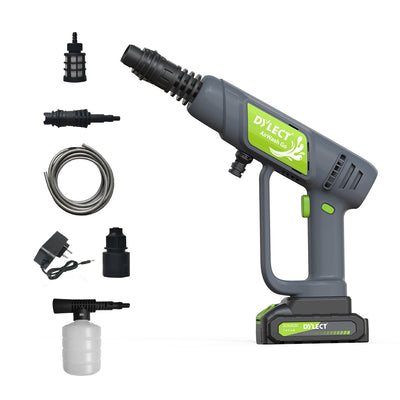
A cordless washer such as Dylect AirWash Go may be convenient when the cleaning spot is away from an external power point. You still need an appropriate water supply, a stable setup and a nozzle arrangement suitable for the furniture. Cordless operation does not make delicate finishes pressure-safe.
What is the right way to wash chairs and tables?
Remove loose dirt, test the finish and wash in controlled passes rather than chasing every mark with a close jet. Stop if the material roughens, paint lifts or water enters joints.
Use the spray pattern and distance recommended for the item and washer. Keep the nozzle moving. For broad surfaces, work in a clear sequence so you can see which sections have been cleaned.
Brush around recesses and textured areas with a suitable soft tool if needed. If a cleaner is used, follow its label and apply it only in a way the equipment manufacturer allows. Do not feed unapproved chemicals through the water inlet.
Turn light furniture only after the washer is stopped and the item can be handled safely. Avoid holding a chair with one hand while spraying it with the other. Clean the underside as a separate step if the material permits it.
Rinse away cleaner before it dries and inspect the result after drying. Tighten or repair loose fittings as appropriate before the furniture goes back into use. Do not hide a damaged joint under a freshly cleaned surface.
How should you clean garden pots?
Empty pots are easier to assess and clean than planted ones. For planted containers, protect the plant and soil and favour gentle cleaning of the outside.
Brush away loose soil first. Check terracotta for cracks, glazed pots for chipped finishes and plastic containers for brittleness. Decorative paint or surface treatments may rule out pressure washing even when the pot itself feels strong.
Do not direct a pressure jet into soil, roots or leaves. Keep cleaning products away from plants unless their labels specifically allow that use. Moving a heavy planted pot solely to pressure wash it can create more risk than using a cloth where it already stands.
For empty containers suitable for washing, clean away loose material before testing a small exterior area. Support the pot securely and avoid concentrating force on its rim or drainage holes. Remove lodged debris with an appropriate hand tool instead.
Cleaning off visible dirt is not the same as disinfecting a container. If a plant had a disease problem, follow relevant horticultural advice for that material before reuse. Do not assume a stronger jet provides the treatment needed.
How do you organise society common-area cleaning?
Agree on the area, method and access arrangements with the society before using a pressure washer in a shared space. A useful common-area cleaning plan includes resident movement, parked vehicles and wastewater handling.
Choose a section that can be temporarily kept clear, such as one seating bay. Keep an accessible route around it and communicate the work before starting. Do not block a fire exit, entrance ramp or essential service point.
Identify drainage and collect loose leaves, packaging and soil before washing. Avoid pushing dirt from one seating area into the next or towards a lift lobby. Where detergents or contaminated runoff are involved, follow local disposal requirements and the society's procedures.
Check for lighting cables, sockets and irrigation controls around planters. These need their own cleaning arrangements. Keep electrical connections dry and do not treat a weather-resistant fitting as permission to direct a pressure jet at it.
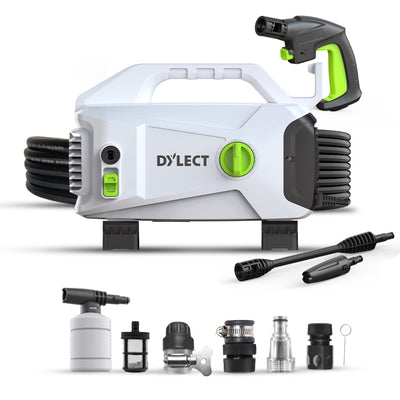
For a larger approved section, a corded washer from the Dylect Ultra Flow Plus range may be worth considering if the water and power arrangements suit the task. Check permitted operating periods and actual site needs before assuming a household machine can handle extended common-area work.
What should you do before returning furniture and pots?
Allow surfaces to dry, inspect the items and reopen shared areas only when they are ready to use. A rushed reset can place clean furniture on a slippery floor or trap moisture beneath a cover.
Check the feet of chairs and tables for retained grit. Wipe accessible recesses and replace cushions only when the frame and fabric are dry. Follow the material's care guidance for any treatment needed after washing.
For pots, make sure drainage remains open and return planted containers carefully to a suitable position. Do not let heavy pots scrape freshly cleaned tiles. Use appropriate help for lifting rather than dragging them across the work area.
Finish with a short handover to the caretaker or household. Note any damaged furniture, blocked drainage or repairs discovered during cleaning. Keep a record of the method that worked for each material. That makes the next cleaning session easier to organise and reduces the temptation to treat every outdoor item the same way.

